
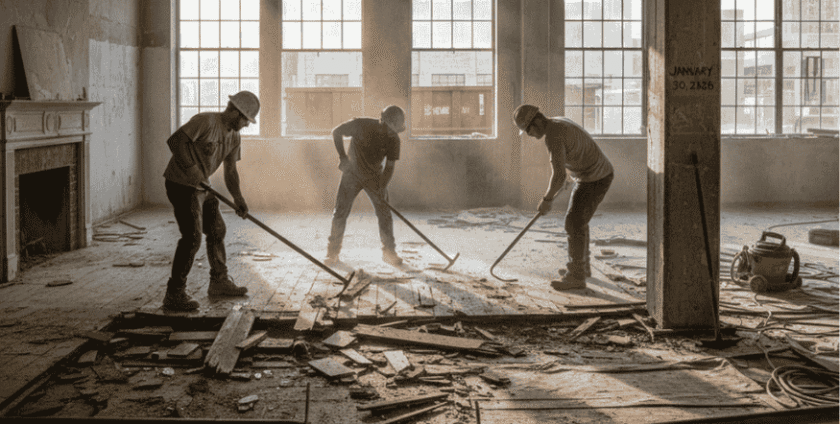
Hardwood flooring is known for its durability, beauty, and long lifespan. However, there are situations where even the strongest hardwood floors reach a point where refinishing or repair is no longer the best option. Understanding when hardwood floor demolition becomes necessary can help homeowners and property managers make informed decisions that protect their property and future investment.
This guide explains when removal is the right choice, what signs to look for, and why professional demolition is essential for long-term flooring success.
Understanding Hardwood Floor Demolition
Hardwood floor demolition involves the complete removal of existing hardwood flooring down to the subfloor. Unlike refinishing, which restores the surface, demolition addresses deeper structural or functional problems that cannot be corrected by sanding or sealing.
This process is often required during major renovations, structural repairs, or when flooring damage extends beyond the surface layer.
When Refinishing Is No Longer Enough
Refinishing is effective when hardwood floors have surface-level wear, scratches, or fading. However, certain conditions make demolition the more practical solution.
One major indicator is severe water damage. Hardwood that has absorbed moisture over a long period may warp, buckle, or develop mold beneath the surface. Once the wood structure is compromised, refinishing will not restore its integrity.
Another sign is extensive cracking or splitting across multiple boards. These issues often indicate subfloor movement or long-term stress that cannot be corrected by surface treatments alone.
Structural Issues Beneath the Floor
Sometimes the problem lies below the hardwood itself. Subfloor damage caused by moisture, pests, or age can destabilize the flooring above it. In such cases, removing the hardwood is necessary to access and repair the underlying structure.
Ignoring subfloor problems can lead to uneven surfaces, safety hazards, and premature failure of any new flooring installed on top.
Multiple Layers of Old Hardwood
Older homes may have several layers of hardwood flooring installed over decades. These stacked layers can raise floor height, interfere with doors, and reduce structural stability. Demolition allows contractors to remove excess layers and restore proper floor alignment.
Removing outdated layers also provides a clean foundation for modern hardwood installation.
Remodeling and Layout Changes
Major renovations often require changes to floor layout, room size, or traffic flow. Hardwood floor demolition allows for seamless transitions when walls are moved or spaces are reconfigured.
Trying to patch old flooring into a new layout usually results in mismatched boards and inconsistent finishes. Full removal ensures a cohesive and professional result.
Safety Concerns and Hazards
Loose boards, deep cracks, and uneven surfaces create tripping hazards, especially in high-traffic areas. In commercial or rental properties, these risks can lead to liability issues.
Demolition eliminates these hazards and allows for safer flooring solutions that meet modern building standards.
Why Professional Demolition Matters
Hardwood floor removal is physically demanding and technically complex. Improper demolition techniques can damage the subfloor, walls, and surrounding structures.
Professional teams use specialized tools and methods to remove hardwood efficiently while minimizing dust, debris, and structural damage. This ensures the space is ready for new flooring without costly repairs.
Homeowners searching for reliable Flooring Demolition Services often discover that professional demolition saves time, reduces risk, and ensures better long-term outcomes.
Preparing Your Property for Demolition
Before demolition begins, furniture and appliances must be removed from the area. Contractors may also inspect the subfloor and identify any hidden issues that need attention once the hardwood is removed.
Clear communication with your contractor ensures the project timeline, expectations, and next steps are well understood.
Environmental and Disposal Considerations
Responsible demolition includes proper disposal or recycling of removed materials. Many hardwood floors can be repurposed or disposed of according to local environmental regulations.
Working with experienced professionals ensures compliance with disposal standards and reduces environmental impact.
Demolition vs Partial Removal
In some cases, partial removal may be possible if damage is isolated to a specific area. However, partial demolition often creates challenges with matching new and existing hardwood.
Full demolition provides a clean slate, allowing for consistent installation and finish across the entire space.
Long-Term Benefits of Hardwood Floor Demolition
Although demolition may seem like a drastic step, it often leads to better long-term results. Removing compromised flooring prevents recurring problems, improves safety, and prepares the space for durable new hardwood.
For homeowners planning to upgrade or sell their property, demolition ensures the foundation is solid and ready for high-quality flooring solutions.
Trusted Local Expertise
Choosing a local specialist ensures familiarity with building styles, climate conditions, and construction standards. Many property owners rely on H&H Hardwood Floors for careful, professional hardwood removal that protects both the structure and future flooring investments.
Knowing when to remove hardwood floors is just as important as knowing when to refinish them. Making the right choice protects your property and ensures lasting results.
- By: seoteam@welcomehomesocial.com
- Category: Floor Demolition
- 0 comment